QuintAce Communities
A community feature for a poker app, from PRD to dev-complete on staging in under a week. An experiment in AI-assisted product design.
- Product
- QuintAce
- Role
- Sr. Product Designer
- Scope
- Design direction, final design
- Timeline
- Under a week
- Year
- 2026
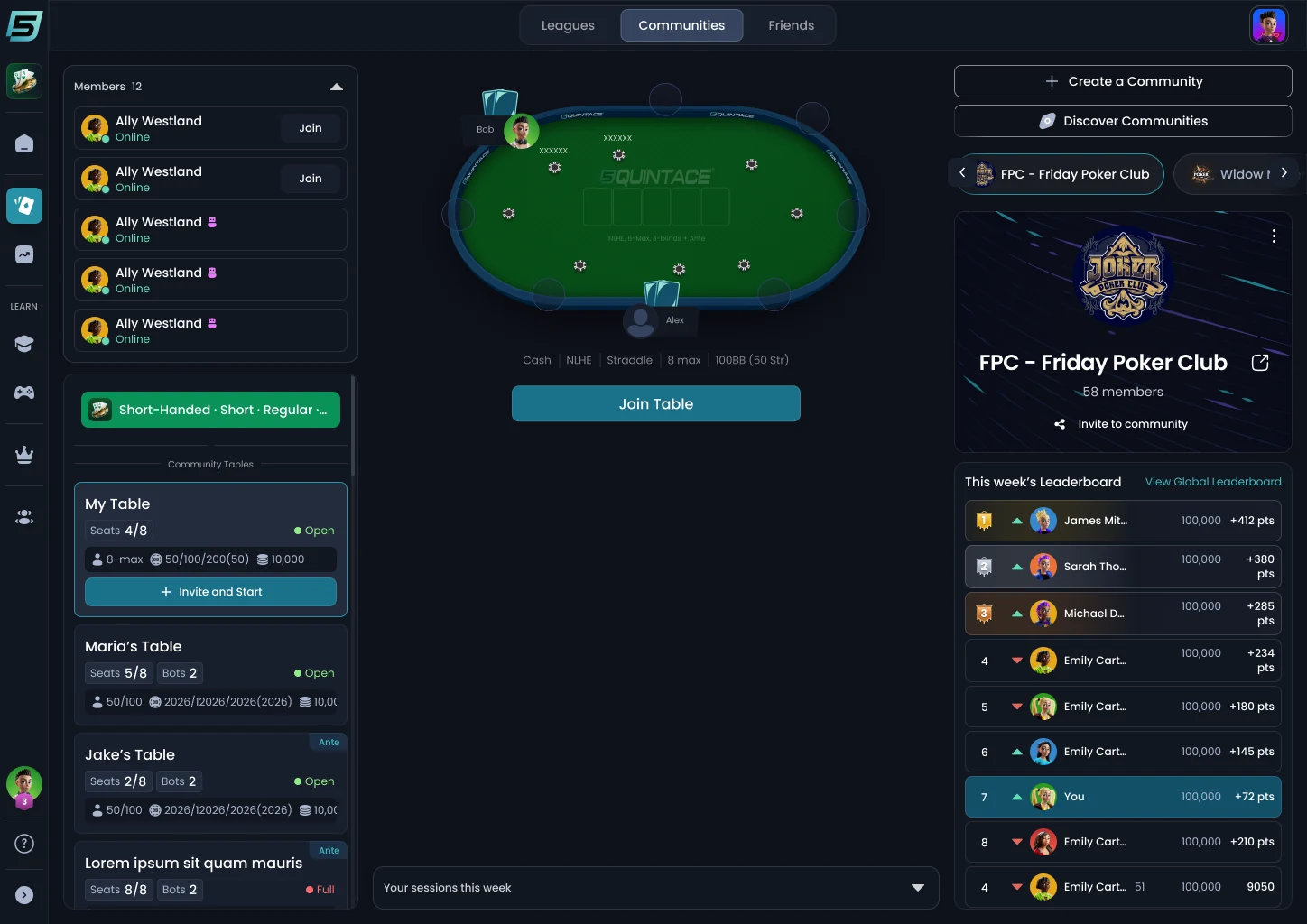
Summary
- Goal
- Let players create a community, play at its tables, post to a message board and compete on a leaderboard.
- Experiment
- Use AI at each stage, from PRD to build, and see how fast a whole feature could reach staging.
- Role
- I chose the direction from AI-generated explorations and finished the design in our design system.
- Result
- Dev-complete on staging in under a week. No usage metrics were set.
The brief
QuintAce's Compete mode already had public Leagues. Communities add a player-run layer on top:
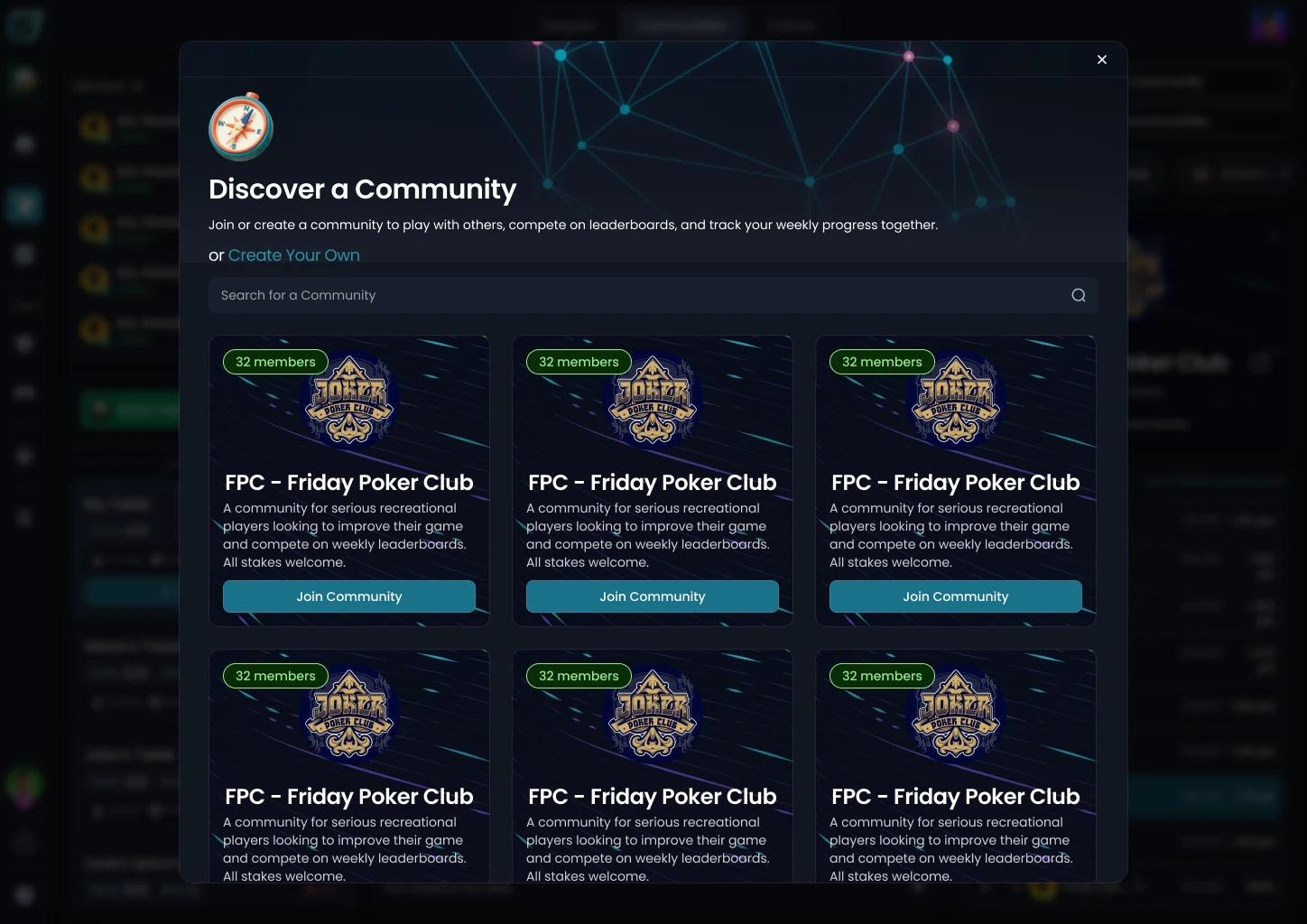
- Create a community, or discover and join one.
- Play at community tables with its members.
- Post to a message board and comment.
- Compete on a weekly community leaderboard.
It was also a test. We set no success metric for the feature itself. The question was how far AI could shorten the path from an idea to working software.
How the week ran
- PRD. Generated with Claude Code from the product manager's input.
- Priorities. The lobby's primary action is getting players to a table. Community actions belong in the Communities tab.
- Explorations. Six lo-fi layouts, generated into Figma with a text-to-Figma skill.
- Direction. I picked one and rebuilt it with our existing design system.
- Build. Engineering took it to dev-complete on staging.
Exploring with AI
The six layouts answer one question in different ways: how should Leagues and Communities share a lobby?
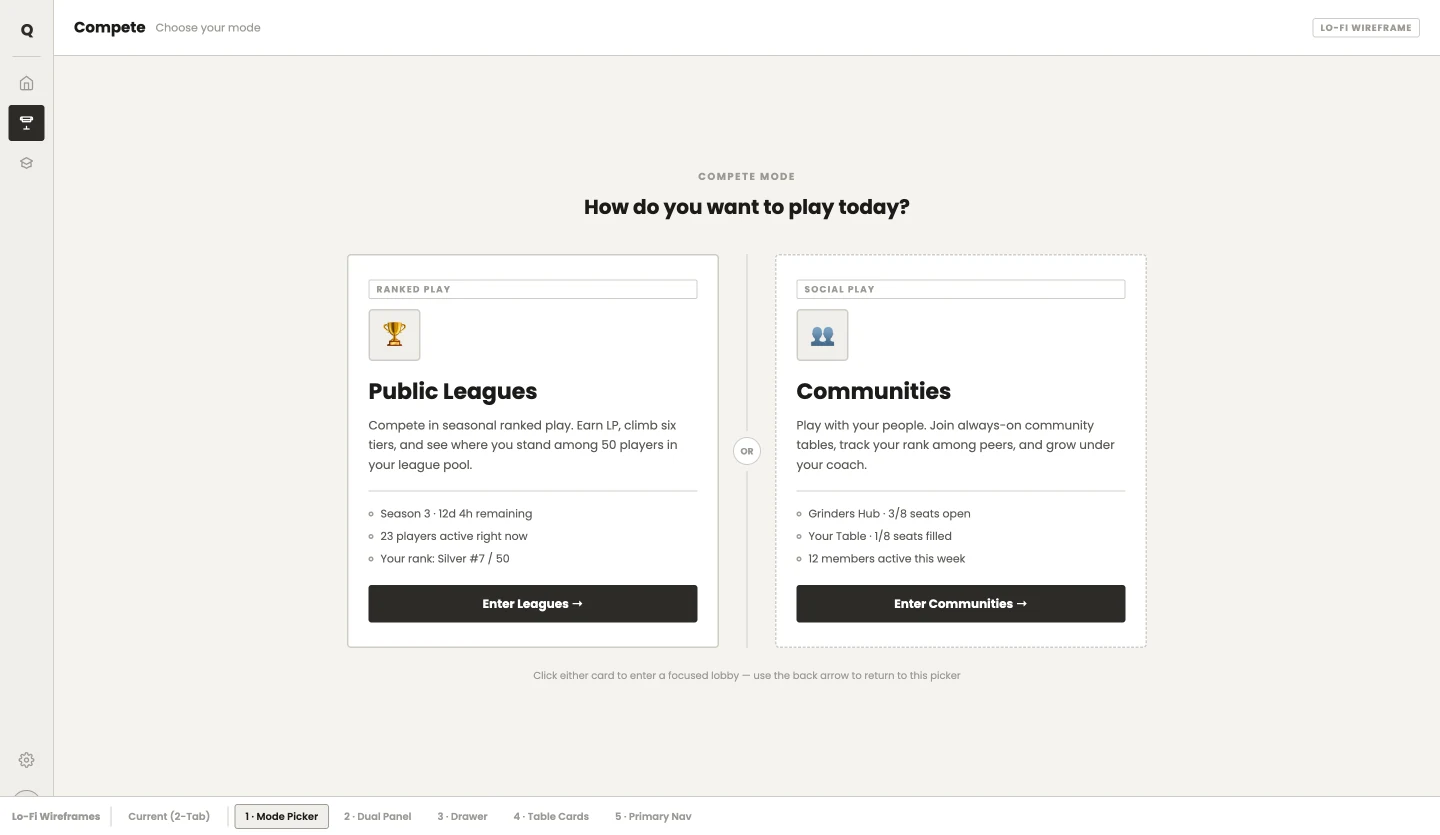
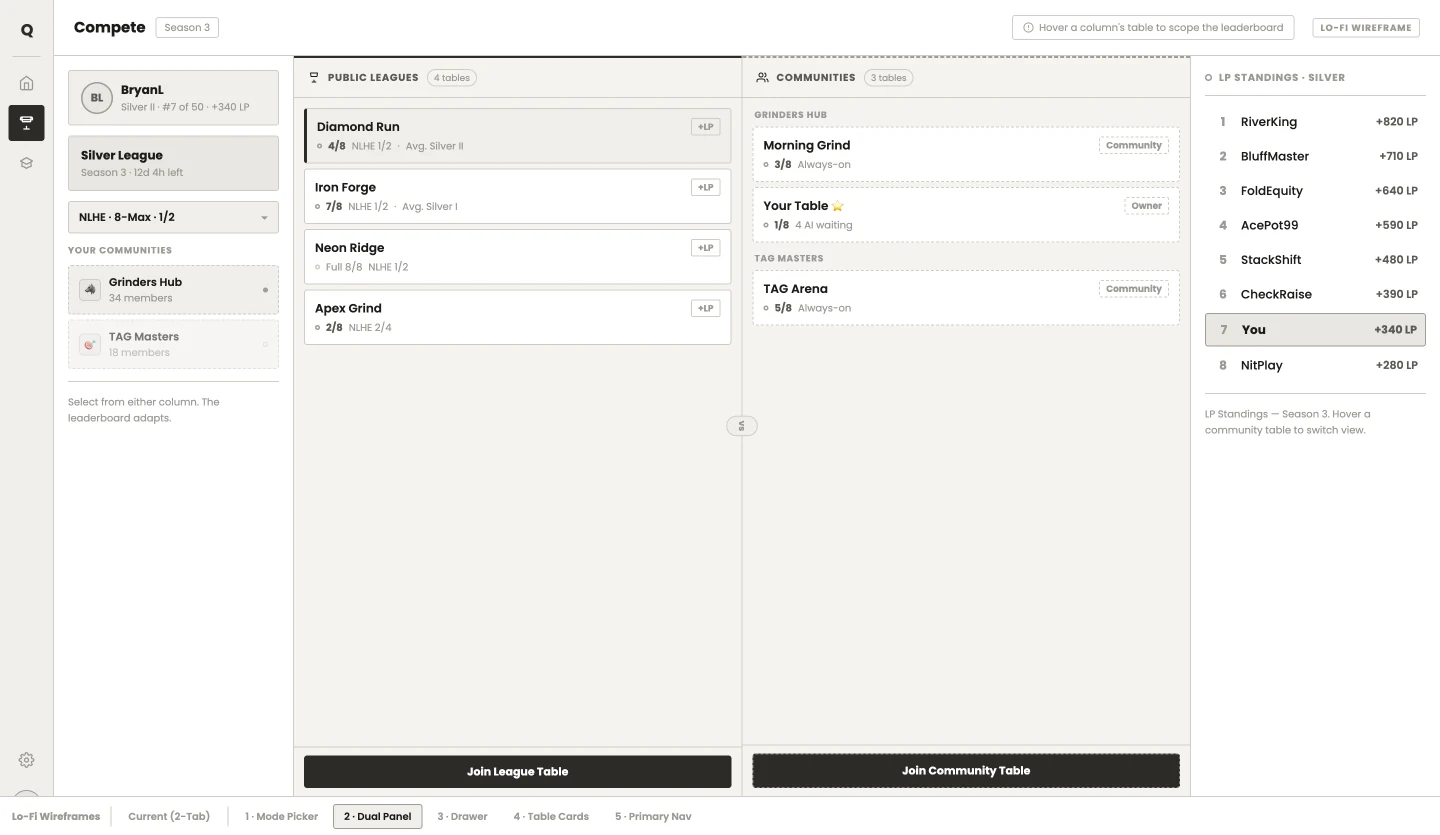
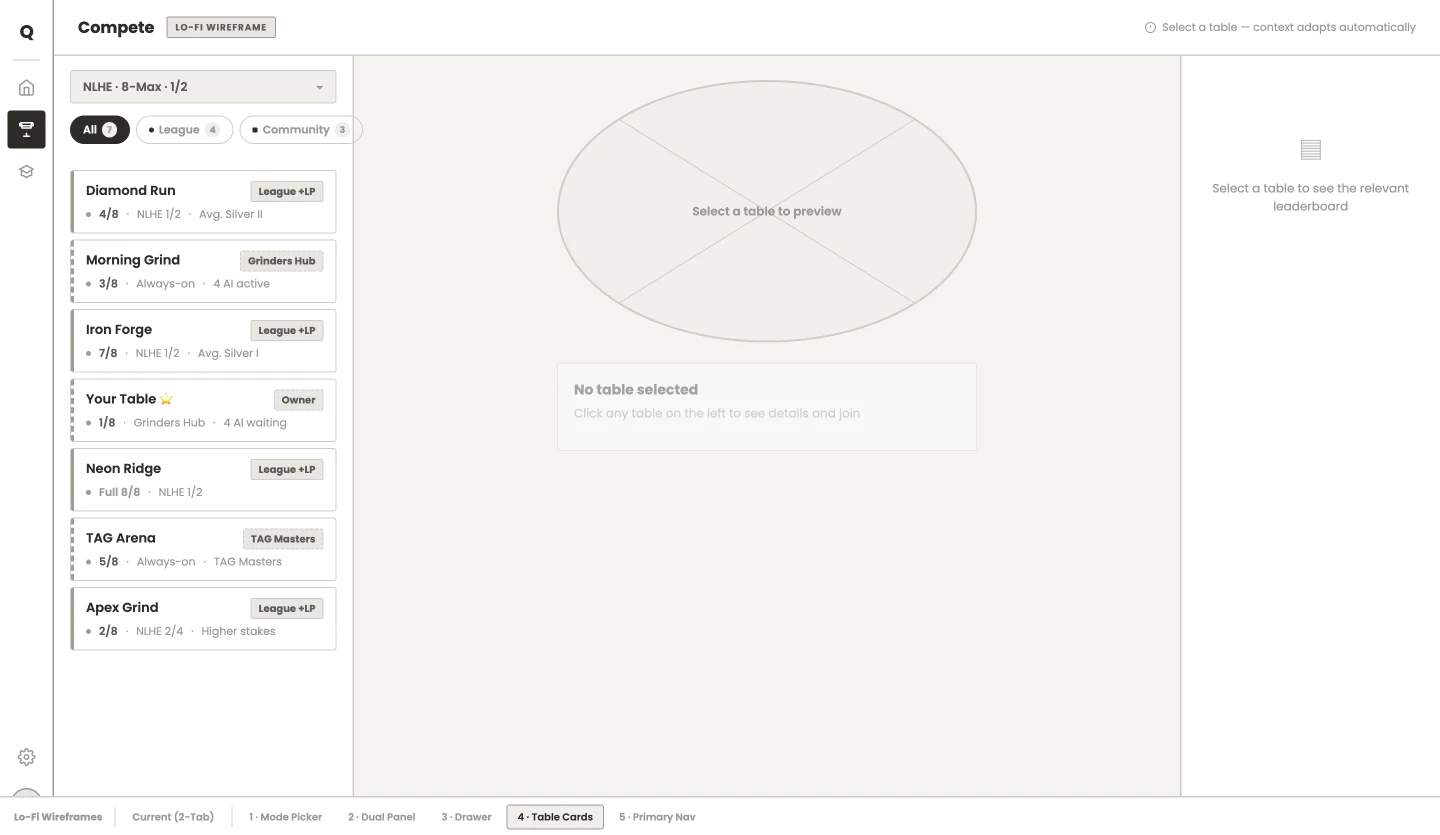
The other three were a bottom drawer, a side navigation and a carousel. What AI gave me here was range: six structurally different options to compare before any polish.
The direction I chose
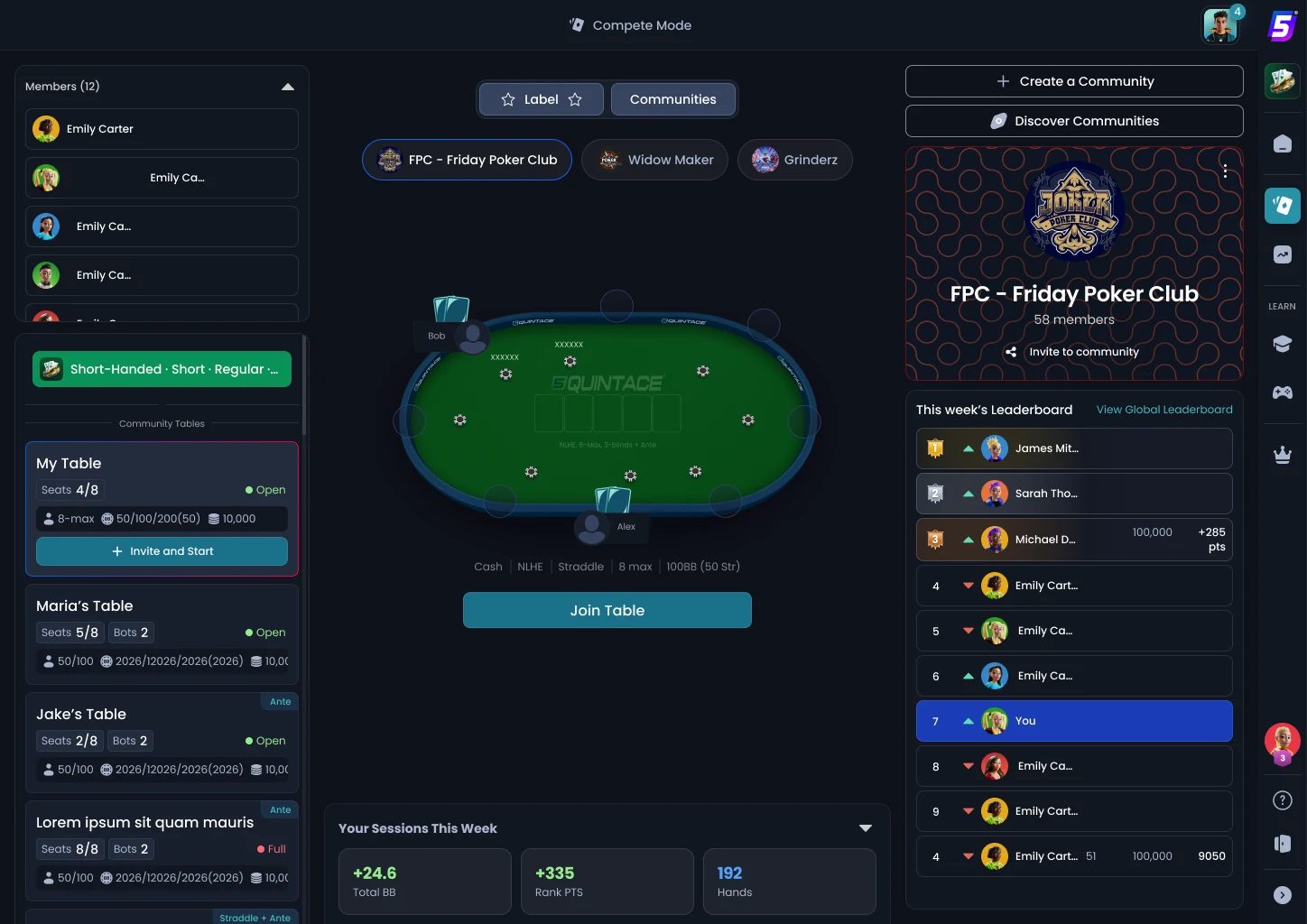
I split the feature in two. The Compete lobby gets a Communities tab beside Leagues and Friends, and it is only for getting to a table: tables on the left, the live table in the middle, the community and its leaderboard on the right. Everything else about a community lives in its own Communities tab.
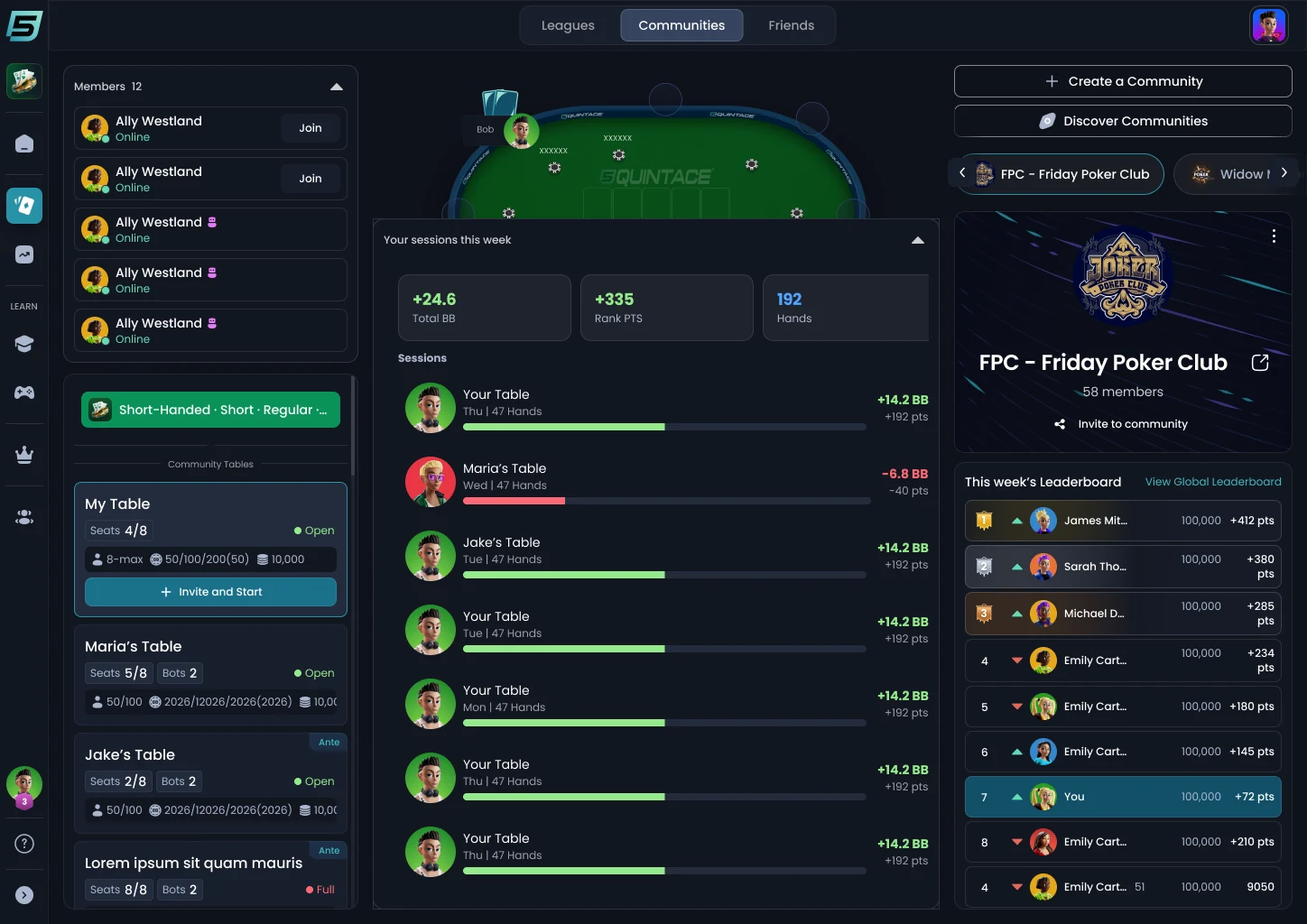
AI output stopped at the wireframe. The final screens are built from our design system components, and the decisions below were mine.
The Communities tab
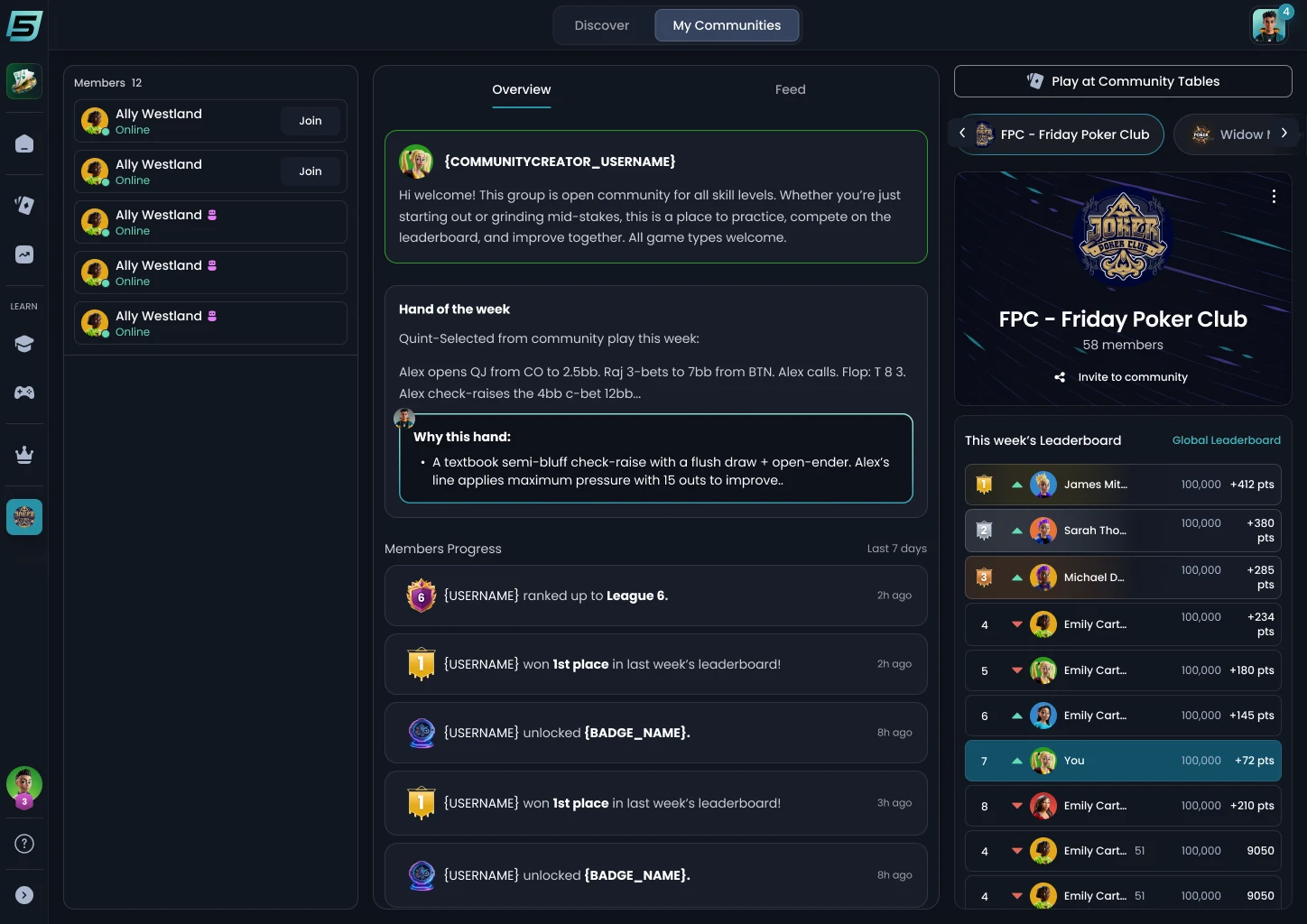
This is where a community lives between games. One button, Play at Community Tables, leads back to the lobby.
Overview
A welcome from the creator, a hand of the week picked by Quint (the app's AI coach) from community play, and a stream of member progress: league promotions, leaderboard wins and badges.
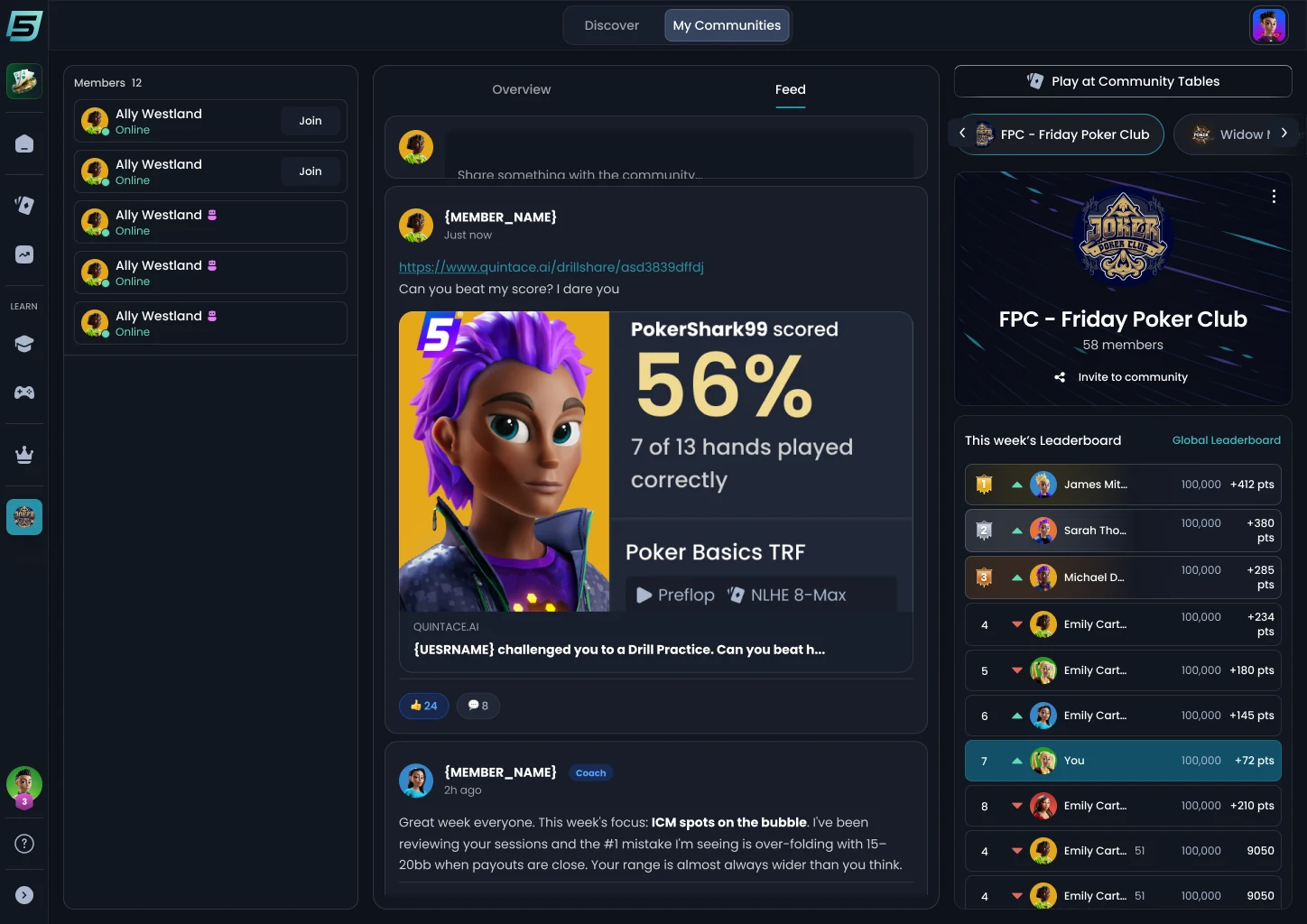
Feed
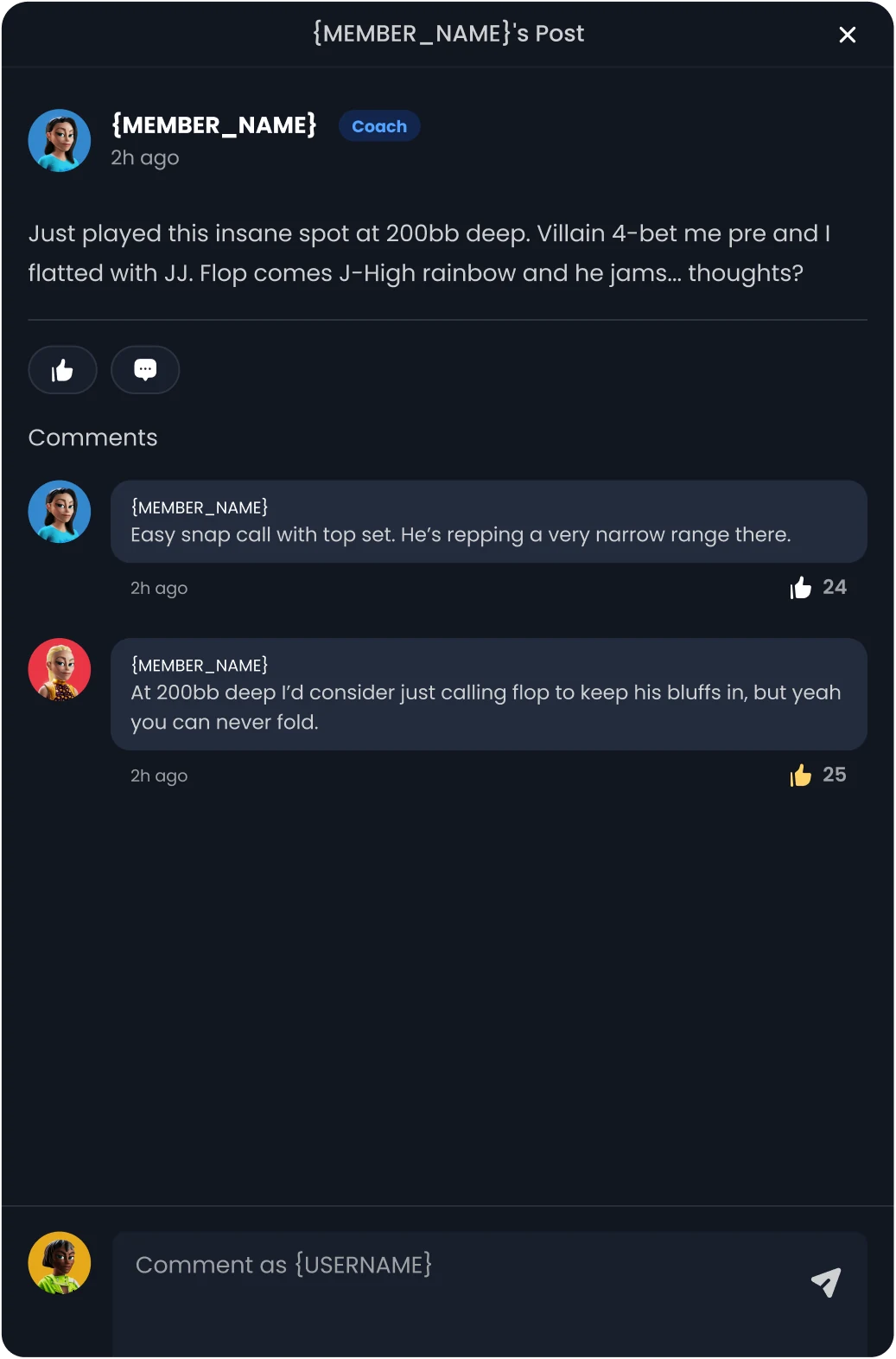
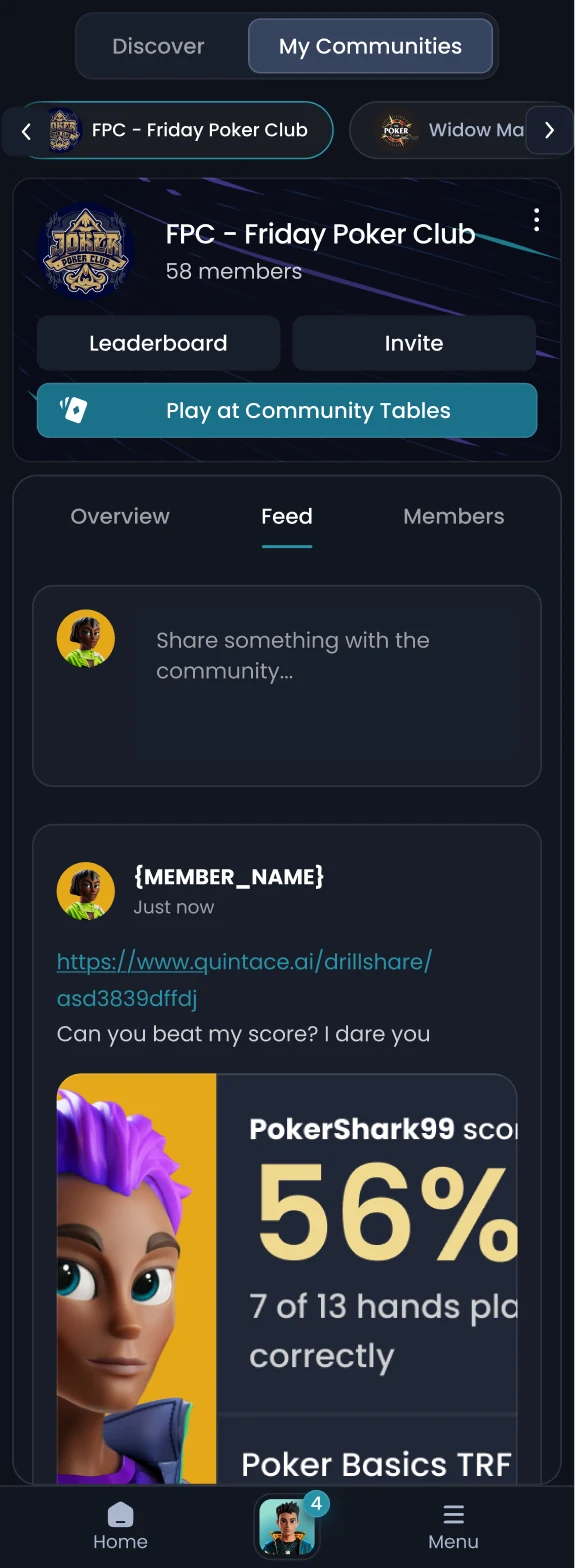
The message board. Members post a message, a hand, a drill or a link, and others like and comment.
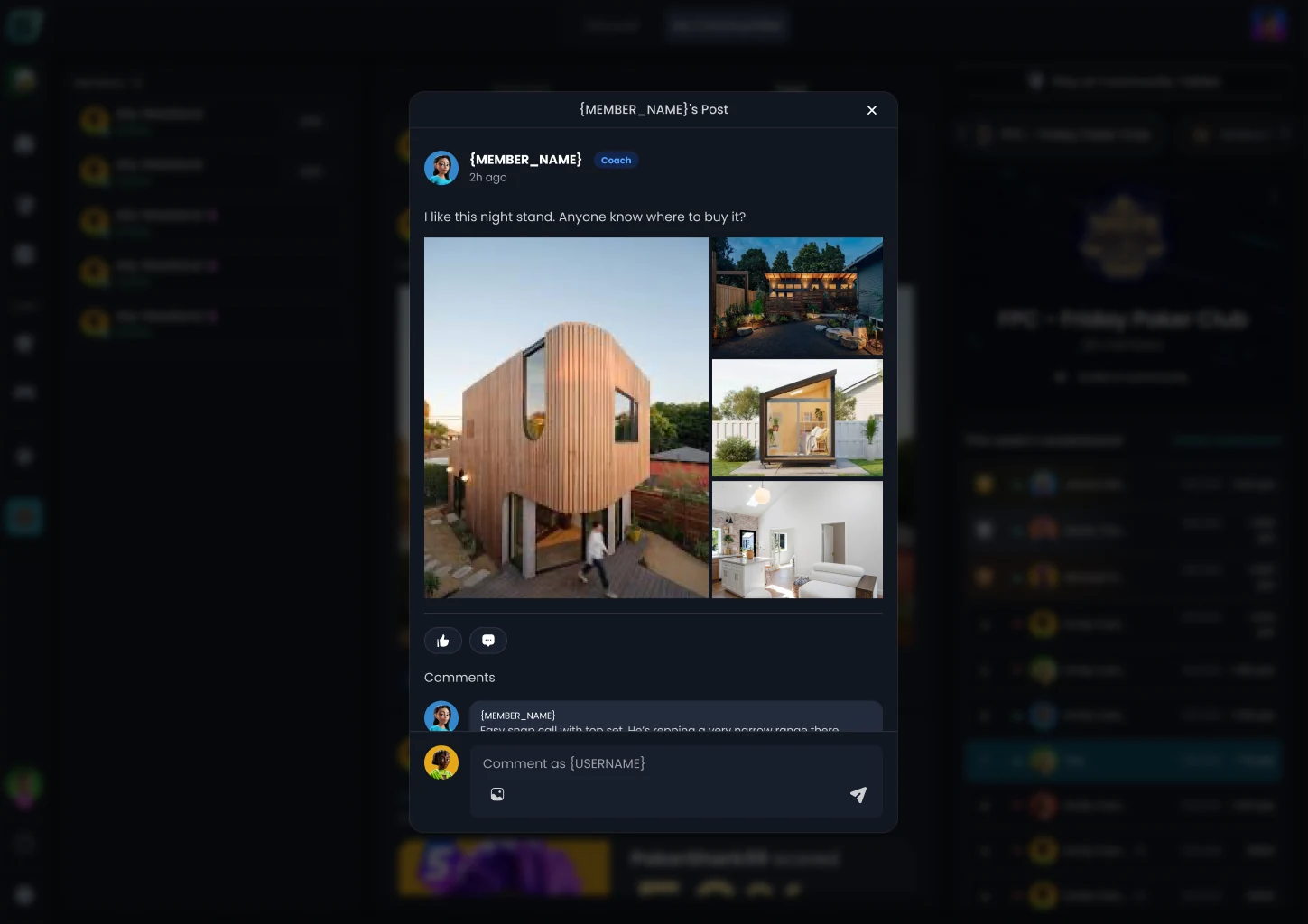
Screenshots in posts
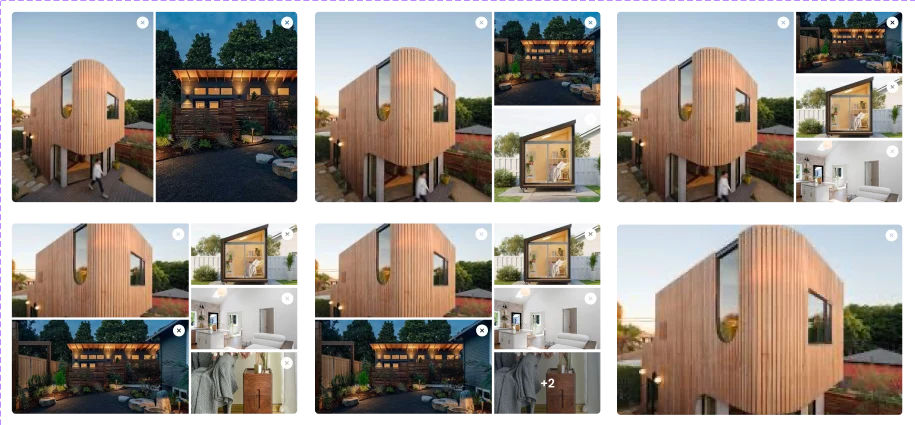
Posts and comments can carry images. I set the layout rules for one image up to six or more, where the last tile shows the remaining count.
Decisions made by hand
Switching communities
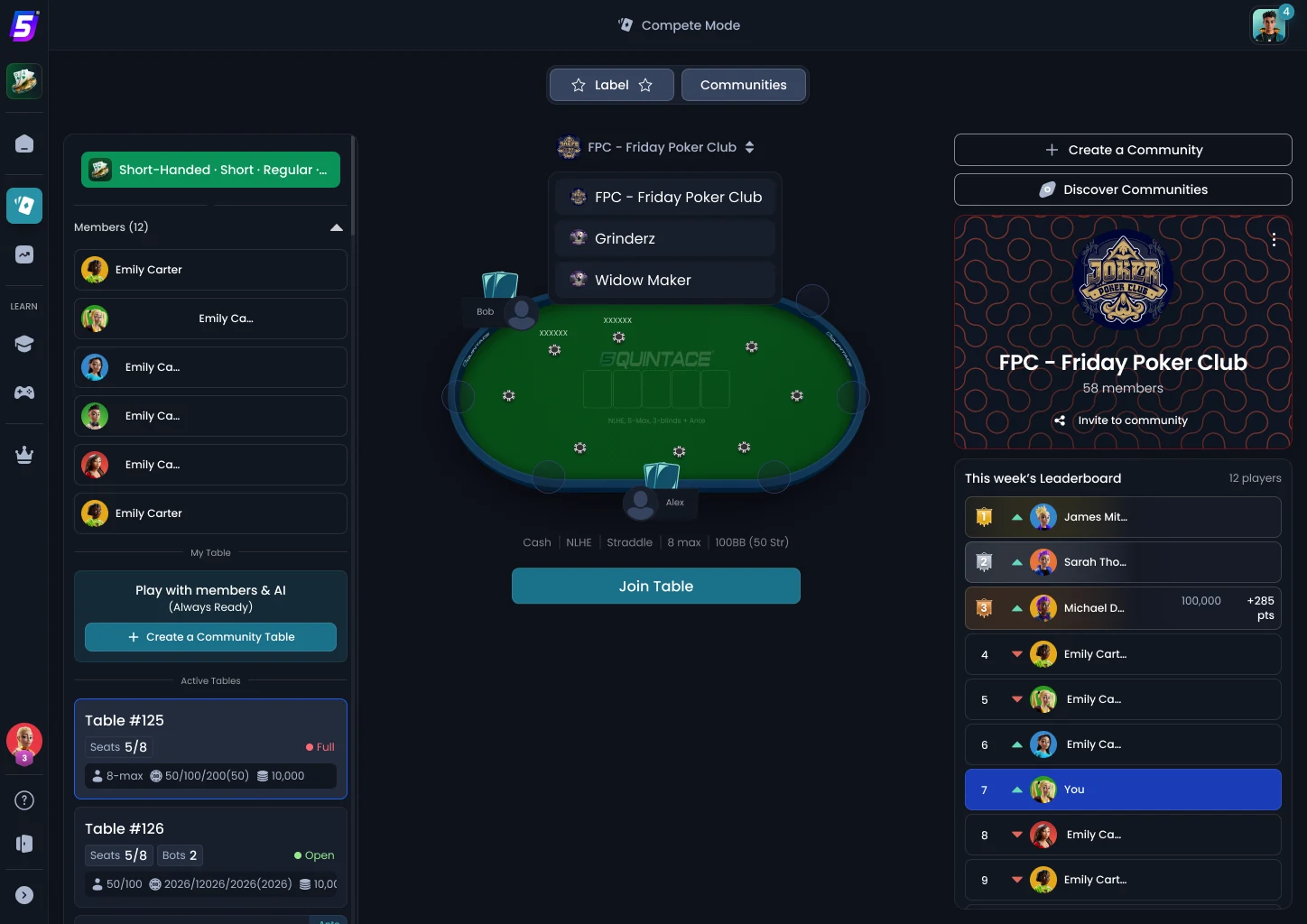
I compared a dropdown with a horizontal list. Shown upfront, the list makes it obvious that you can switch communities. A dropdown hides that. The trade-off: players can join three communities today, and if that limit grows, the dropdown will scale better.
Rules for the edges
- No community yet: the tab opens Discover.
- Already joined: it opens the last active community.
- At the limit of three: joining another is blocked, with the reason shown.
- Leaving asks for confirmation. If the admin leaves, the community is deleted.
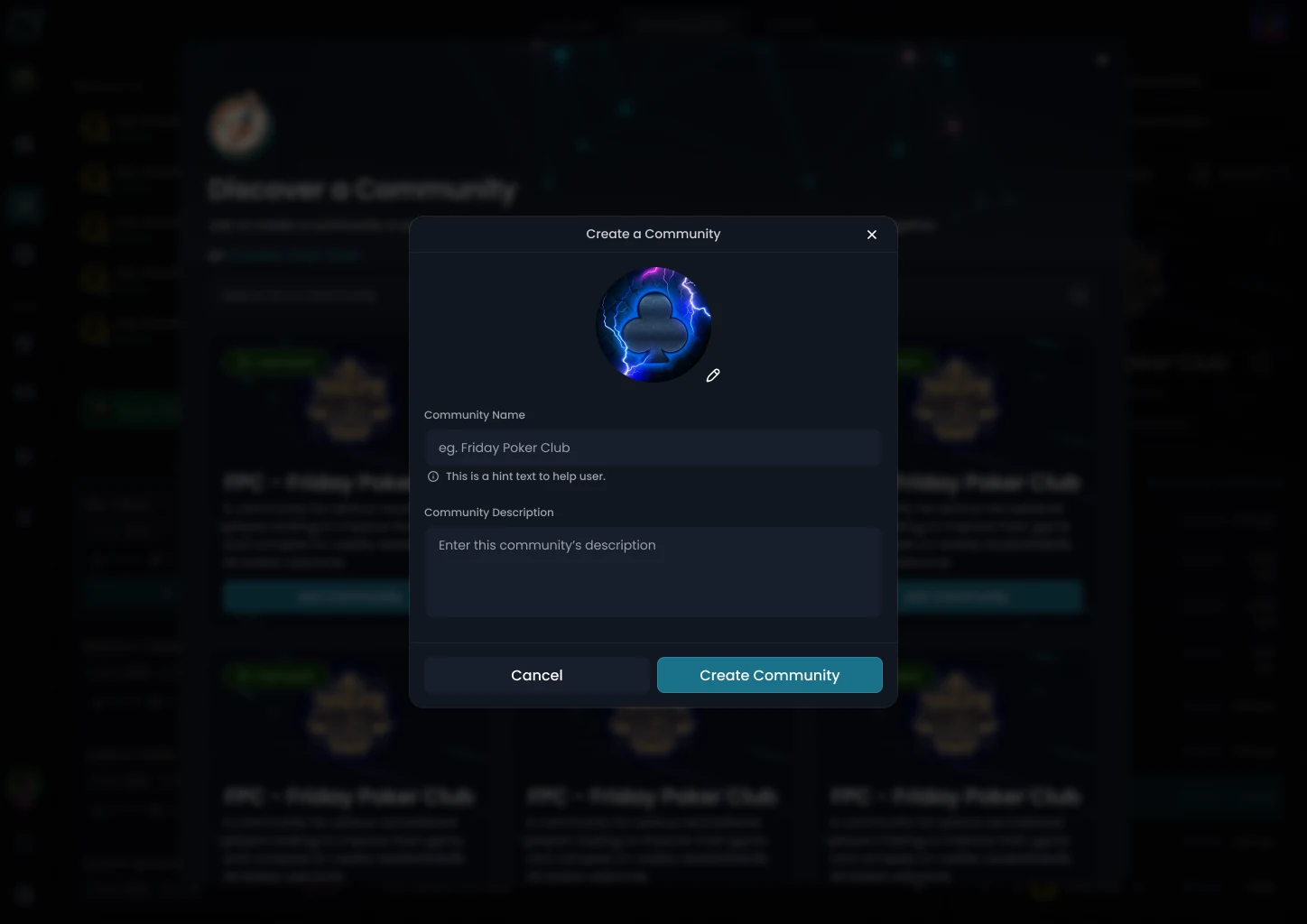
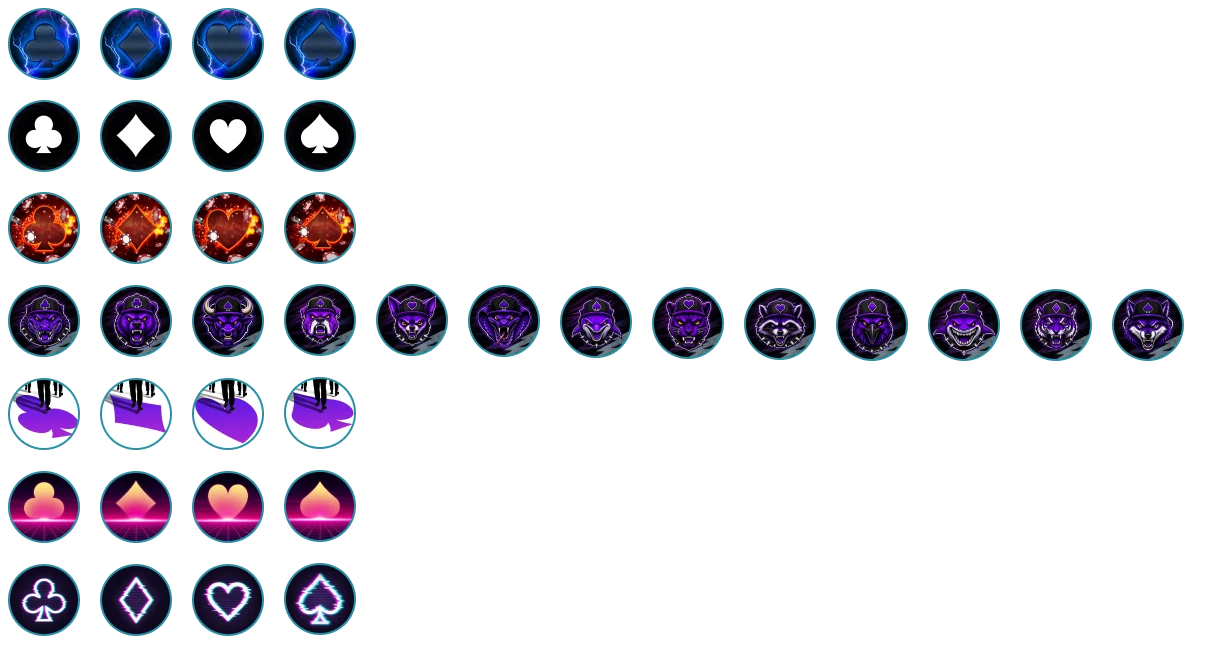
A logo without an upload
Creating a community takes a name, a description and a logo picked from a preset set of 37.
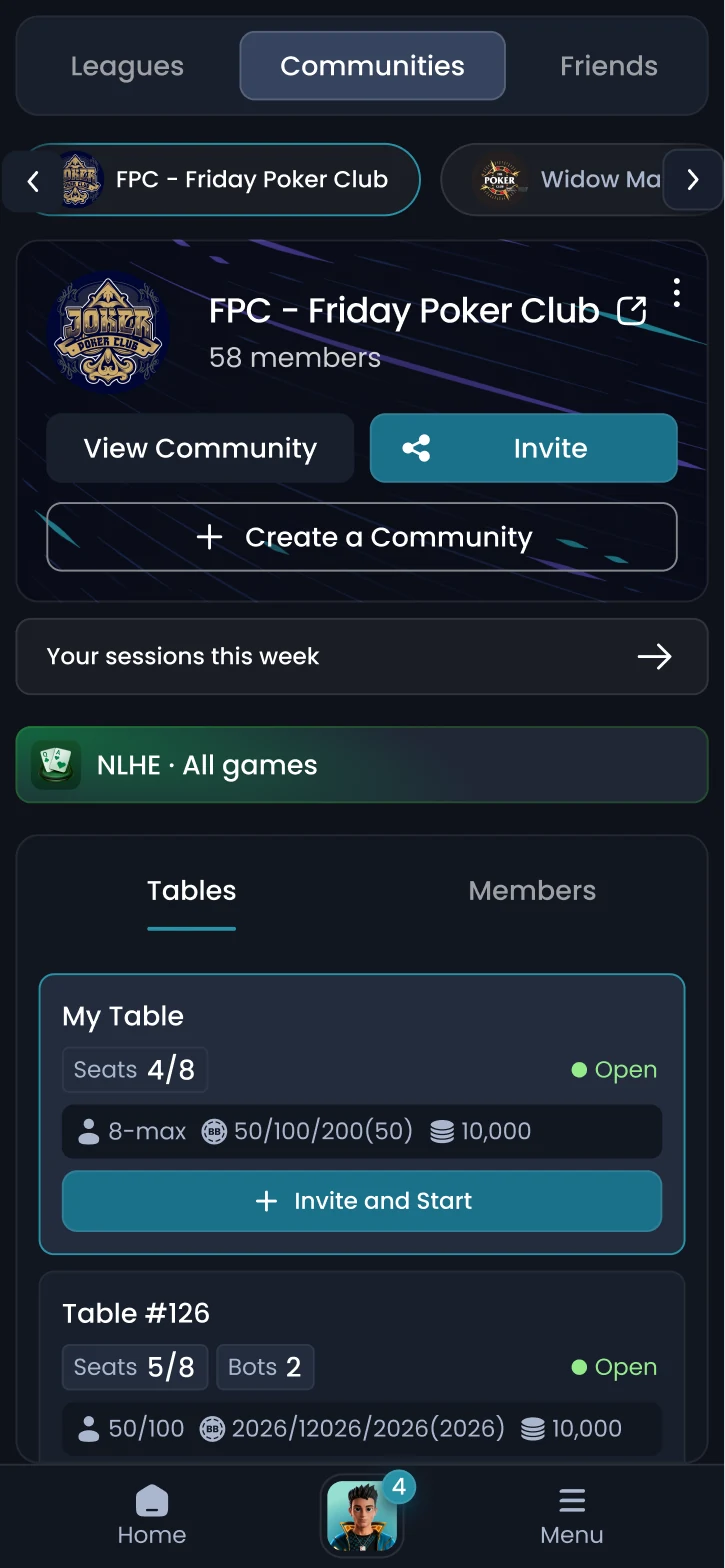
Three screen sizes
Every flow is specified for desktop, tablet and mobile.
Outcome
- PRD to dev-complete on staging
- Under a week
- What AI did: drafted the PRD (Claude Code) and produced the layout options (a text-to-Figma skill).
- What I did: set the priorities, chose the direction, built the final screens in the design system, and defined the edge states and responsive specs.
- Not measured: anything about players. The feature had no usage metric, and dev-complete on staging is not a release.
Reflection
- The time saved was in the blank-page stages: the first draft of the PRD and the first set of layouts. The decisions still took judgment.
- Speed to staging says nothing about whether players want communities. Next I would define that measure, such as the share of players who join a community and come back to its tables.