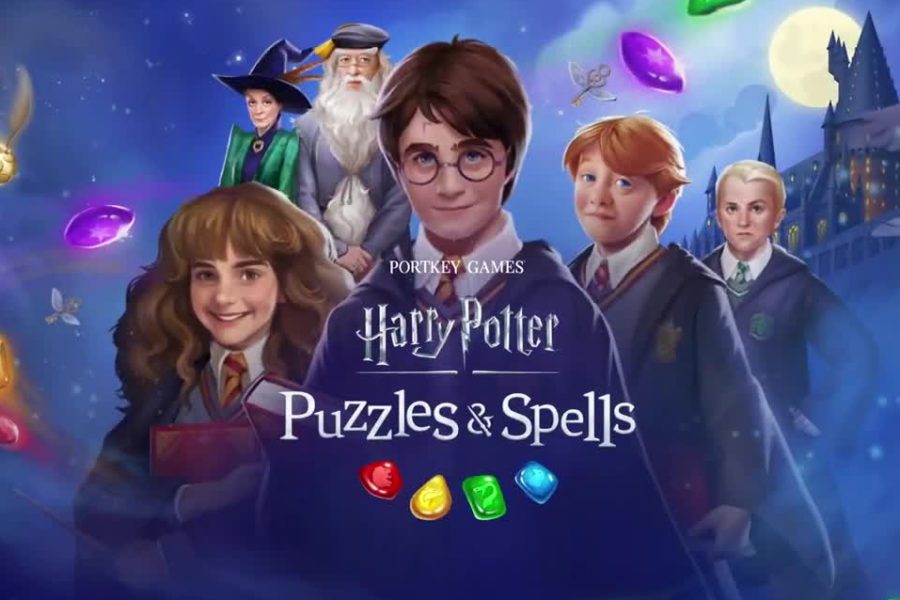
Harry Potter: Puzzles & Spells
I managed a designer and led experience design on a match-3 mobile game with about 400k daily players.
- Employer
- Zynga
- Role
- Design Lead
- Scope
- People management, hands-on design
- Year
- 2022
Summary
- Context
- A live match-3 mobile game with about 400k daily players.
- Role
- One of two designers. I managed the other and directed the artists on Club Challenge.
- Featured
- Club Challenge, a social event for clubs with more than 20 screens.
- Result
- Shipped on time. Daily revenue passed $100k for about a month, and upkeep didn't justify the cost.
My role
I managed the game's other experience designer, including 1:1s, reviews and hiring. About 70% of my time went to leading and 30% to hands-on design.
Among the senior leads of production, product, game design, art, engineering and QA, I agreed what design would deliver for each feature. Three artists reported to the art director, and I directed their work on Club Challenge.
Club Challenge
An interactive map for clubs, with hidden rewards and special encounters. It was a "bold beat", expected to lift revenue by 10% or more. The game earned $80k to $90k a day, and the aim was to pass $100k.
Top-down over 3D
I proposed two directions to the art director, an immersive 3D maze or a top-down map. Players only needed to find the next node and play, and a 3D maze would make that harder. A top-down map is easy to scroll and scan, which suited casual players. It was a judgment call, not a tested one.


What I owned
- UX and flow. I designed these myself. Most of the UI art was the other designer's.
- Coverage. I listed every screen and asset and assigned each to UI, concept art, animation or sound.
- Priorities. I set priorities and allocated people with the other leads.
- Reviews. From wireframes through Unity implementation and QA, I kept feedback on what a player would understand.
In my first concept every node is a puzzle, and bigger nodes are harder, up to a boss.

More than 20 screens, with every flow and edge case checked.

Outcome
- On time. Rare for a bold beat. The main cut was showing club members on the map in real time, which I knew was a long shot given its engineering cost.
- Map tools. Game designers can make their own maps with little help from artists and engineers.
- Mixed revenue. Daily revenue passed $100k for about a month. But every new map needed new art, and each asset needed Warner Bros. approval. The product manager judged the upkeep not worth it when smaller features earned more for less.
- Lesson. The cost of keeping a feature running belongs in the decision at the start, not after launch.
- Missed celebration. Defeating the final boss felt flat. I would add a cutscene with Harry or Hermione sliding in to congratulate the player.
Making design's role clear
Roles were unclear. Some designers drifted into product management, and the more technical ones overlapped with engineers and technical artists.
With the UX director, I defined where UX and UI work began and ended, and a pipeline showing design's part from the one-page brief to QA sign-off. It cleared up the overlap, and showed other disciplines that design could run the whole process.
